
The first thing Rui Mendonça does when I arrive at his garage in Marvila — a converted fish-processing warehouse on the eastern edge of Lisbon, brick and steel and a roof that leaks in one stubborn corner he refuses to fix — is hand me a helmet. Not metaphorically. He hands me an open-face helmet, points at a 1972 Alpine A110 in a faded shade of French blue, and says, “You want to talk about the cars, we talk in the cars. I don’t do interviews in chairs.”
This is, I will learn over the next four hours, the entire philosophy compressed into a single gesture. Mendonça, sixty-one, a retired structural engineer who spent his career building bridges across the Tagus and points north, owns eleven cars. He has never owned a trailer. He has never paid to have one of his cars transported to a concours. He drives all of them, on real roads, in real weather, and the question that animates him — the one he returns to all afternoon, sometimes mid-corner — is why so many of his fellow collectors have decided that the highest expression of loving a car is refusing to use it.
The collection, such as it is
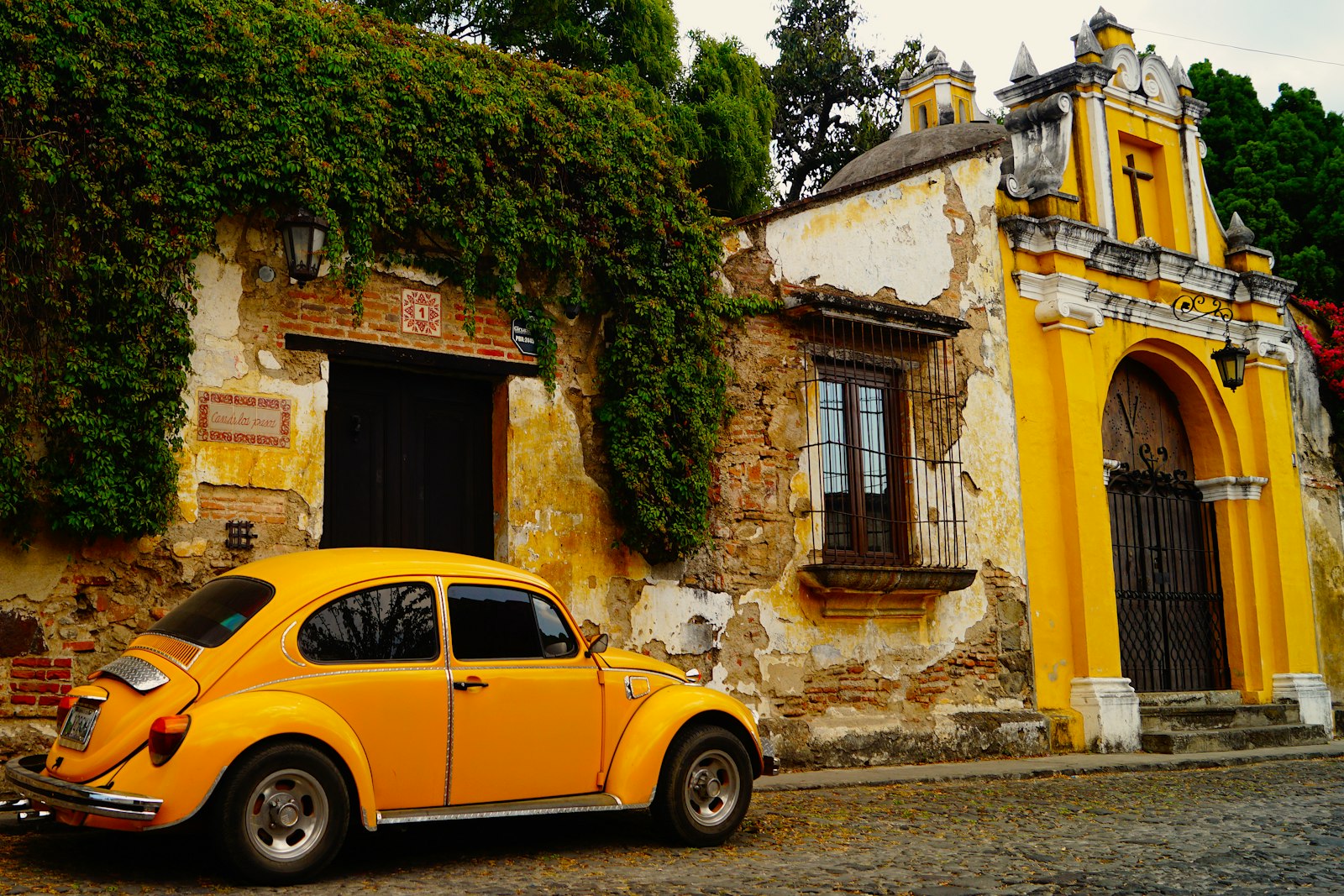
I should describe what he has, because the collection is unusual in a way that tells you everything. There is no taxonomy to it — no “all the air-cooled Porsches” or “every year of the E-Type.” There is the Alpine A110, which he has owned for nineteen years and driven, by his own logbook, just under 140,000 kilometres. There is a 1967 Volkswagen Beetle in a sun-faded yellow, the car he learned to drive in, bought back from the original family in 2009. A 1985 Lancia Fulvia coupé. A Citroën DS that he describes, accurately, as “the most comfortable thing I have ever sat in that is not a bed.” A 1990s BMW M3 of the E36 generation, which he uses, with no apparent irony, as a winter car. Two motorcycles. A Mercedes 280SL of the same generation as the one I own — he bought his well; I bought mine badly, and I tell him so, and he laughs for longer than I’d like.
None of them is concours. All of them are honest. The Alpine has a stone chip in the windscreen he has named. The Beetle has a dent in the left rear wing that he could fix in an afternoon and won’t. “That happened in 1971,” he says, “before I owned it. A man in Setúbal reversed into it at a wedding. The family told me the story when I bought it. If I fix the dent, I throw away the story. The dent is worth more than the metal.”
The argument
I have spent fourteen years standing in the back of auction rooms watching cars sell on the strength of their not having been used — delivery-mileage moderns, “museum-stored” classics with the plastic still on the seats, cars whose entire value proposition is the absence of the very experience they were built to deliver. So I came to Marvila half-expecting a charming eccentric, and left convinced Mendonça is closer to right than the market is.
His argument has three parts, and he makes them while threading the Alpine through the hills above Sintra at a pace that has me checking my seatbelt.
The first is mechanical, and it is the one even his critics concede. “A car that does not move dies slowly,” he says. “Seals dry. Fuel turns to varnish. Tyres flat-spot. Brake fluid drinks water from the air. The collector who trailers his car to a show twice a year and parks it the other 363 days is not preserving it. He is embalming it. And then he is surprised, at the sale, when the buyer’s inspector finds a clutch that has welded itself solid.” He is not wrong, and any honest restorer — I think of the people I trust most in this trade — will tell you the same: the worst thing you can do to an old car, short of crashing it, is leave it still.
The second argument is economic, and here he diverges sharply from the prevailing wisdom, which holds that mileage is a defect to be minimised. “Everyone tells you low mileage is value. For the very rarest cars, fine, maybe. But for the cars most of us actually own?” He waves a hand. “A documented car with 140,000 honest kilometres and a folder showing it was serviced every year, driven every year, sorted every year — that car is more reliable, more sorted, and frankly more knowable than a 12,000-kilometre car that sat for thirty years and is one long hill from a catastrophe nobody has discovered yet. I would rather buy the used car. I have bought the used car, every time.”
I push back on this, because it is too convenient. The market plainly pays a premium for low mileage, and Mendonça is not so naive as to deny it. “The market pays for it, yes,” he allows. “The market also pays for a great many things that turn out to be air. I am not telling you my Alpine is worth more than a 20,000-kilometre one. I am telling you mine works, and his is a lottery ticket, and I sleep better owning the one that works.”
Preservation versus use
The third argument is the one he cares about most, and it is not financial at all. We have stopped at a miradouro above the coast, the Alpine ticking as it cools, the Atlantic doing its grey afternoon thing below us, and Mendonça gets quiet for the first time all day.
“There is a kind of collecting now that is really just a kind of storage,” he says. “A man buys a car as an asset, puts it in a climate-controlled box, watches a number on a screen go up, and sells it without ever having driven it in the rain. He has owned the car the way you own a share certificate. He has experienced none of it.” He gestures at the Alpine. “This car has carried my daughter to her university. It has broken down outside Burgos and I have fixed it on the roadside with a Spanish farmer holding a torch. It has a smell — warm oil and old leather and the specific dust of this country — that you cannot buy and cannot store. That is the car. The metal is just the part that holds the experiences. A collector who never drives owns the metal and throws away the car.”
I ask the obvious question — what about the genuinely irreplaceable car, the one-of-twelve, the car a careless drive could destroy and no money could replace? He concedes the point faster than I expect. “Yes. There are cars too important to use hard, and I do not own any of them, on purpose. I buy cars I can afford to use. That is the discipline. If a car is so valuable that using it is irresponsible, then I do not want it, because a car I cannot use is, to me, not a car. It is a sculpture, and I am not a sculpture collector.”
What the trade could learn
There is a self-serving version of this philosophy — the man who drives his cars hard and then complains that the market doesn’t reward honest mileage — and Mendonça is alert to it, which is what saves the argument from being mere romance. He keeps records like the engineer he was: every service, every part, every repair, photographed and filed. His cars are not scruffy. They are maintained, which is a different and harder thing than preserved. The folder on the Alpine is two inches thick. When he eventually sells one — he has sold two over the years, both to people he interviewed first, as if he were the buyer — the new owner gets a car that is a known quantity down to the last bolt.
That, I think, is the part of his philosophy the broader market would do well to absorb, even as it keeps paying its premiums for plastic-wrapped seats. The correction I have spent two columns describing — the deflation in the speculative middle of the collector market — is in part a correction of exactly the storage-as-collecting mindset Mendonça despises. The cars holding their value through the downturn are, again and again, the documented, sorted, honestly-used examples with a folder and a story. The cars falling fastest are the ones bought as numbers on a screen by people who never turned a key. The market, in its slow and graceless way, is beginning to pay for the thing Mendonça has been doing for forty years: using the cars, and keeping the receipts.
He drops me back at the warehouse as the light goes. He does not put the Alpine away with any ceremony — no covers, no battery tender theatre, just a wipe of the windscreen and a pat on the roof, the gesture of a man saying goodnight to something alive. “Tomorrow,” he says, “I take the Citroën to Evora. Four hours each way. For lunch.” He says it the way other collectors describe acquisitions. As far as I can tell, he means it the same way too.
I drove home to my own garage and looked at my badly-bought 280SL, which had not moved in three weeks, and felt the specific guilt of a man who reports on this world for a living and had, somewhere along the way, started treating his own car like an asset. I took it out the next morning. It needed it. So, it turned out, did I.