
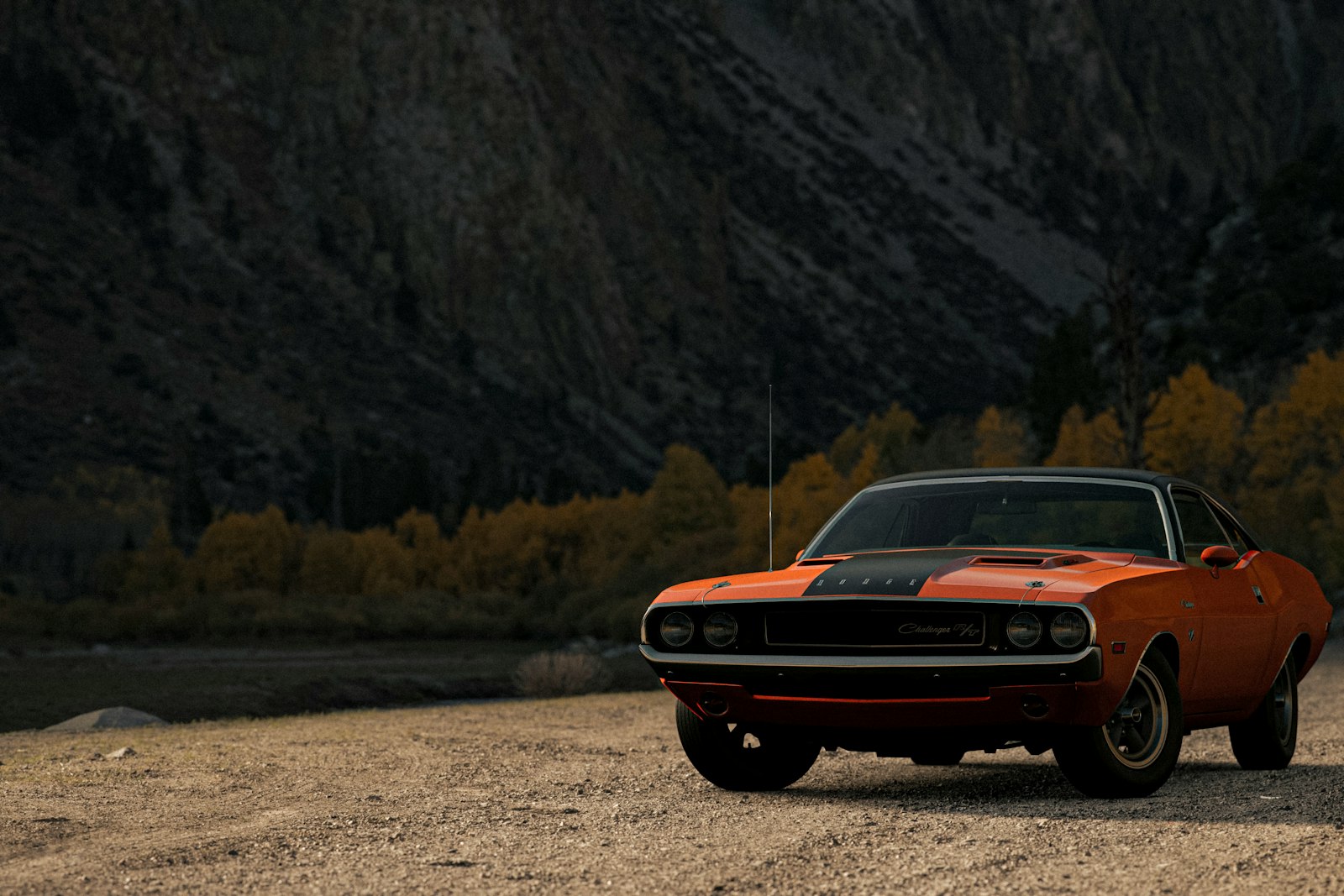
Every January the collector-car business decamps to Arizona and tells itself a story about the year ahead. The story is usually wrong in its particulars and right in its mood, and 2026 was no exception. I spent five days walking the tents at Barrett-Jackson, the consignment rows at RM Sotheby’s Arizona Biltmore sale, Gooding & Company’s Scottsdale offering, and the Bonhams docket at the Westin Kierland, notebook full of hammer prices and a growing sense that two markets I cover most closely — American muscle and air-cooled Porsche — are now moving in opposite directions.
Let me state the headline before I justify it: the speculative froth in muscle has come off the top, hard, while the disciplined money in air-cooled 911s held its line and in places pressed forward. Neither statement is a slogan. Both are visible in the results if you read past the press releases, which as always reported the cars that sold and stayed quiet about the cars that didn’t.
The muscle market: thinning at the speculative peak
Barrett-Jackson is the wrong place to read prices but the right place to read crowd psychology, because everything there sells — the house runs no-reserve and the room is built to manufacture momentum. So I watch the spread between comparable cars rather than the top line. A documented 1970 Plymouth Hemi ‘Cuda, numbers-matching, restored to the usual over-restored standard, hammered into the mid-$300,000s plus the buyer’s premium. Two years ago that same car was a $450,000-to-$500,000 conversation. A ‘71 Hemi Charger R/T, one of the genuinely scarce ones, made strong money — call it the high $200,000s all-in — but the tribute cars, the clones, the “built not bought” restomods that were printing money in 2022, came in soft. A clean Pro-Touring first-gen Camaro that would have chased $200,000 at the peak struggled to clear $120,000 with premium.
That is the froth coming off. Not a crash — the genuine articles still find buyers — but the marginal speculative bid has gone home. The man who bought a restomod in 2021 because his neighbour made money on one is no longer in the room, and the cars he chased have repriced to reflect his absence.
RM and Gooding tell the cleaner story because reserves expose conviction. RM’s muscle docket was deliberately thin this year — a tell in itself; the house knows where demand is — but a well-documented L88 Corvette carried its number and made meaningful money, north of $2 million for the right one, because that car was never a speculative play. It is blue-chip, the supply is fixed, and the buyer pool is patient and rich. Beneath the blue chips, though, the mid-market Chevelles, the Boss 302s, the Six-Pack cars, posted sell-through that I’d put generously at the low-to-mid 70s percent across the Scottsdale reserve sales combined. A year ago that figure ran into the 80s. The no-sales clustered exactly where you’d expect: ambitious estimates on good-but-not-exceptional cars whose owners are still pricing to the 2022 screen.
What held in muscle — and it’s instructive
The strength inside the weakness was documentation and rarity, in that order. A car with a Galen Govier report, the build sheet, the broadcast sheet, the fender tag that matches, sold within or above estimate even in a softer room. A car telling the same story with “believed to be” in the catalogue description got marked down by the audience in real time. This is the market doing exactly what it should: in a thinner market, buyers pay for certainty and discount ambiguity, and the premium for ironclad provenance widens. If you are a muscle buyer in 2026, that is your edge. The froth has gone; the discipline has returned; paper matters more than paint.
Air-cooled Porsche: the line held
Now to the half of the desert I find genuinely interesting this year. The conventional wisdom since roughly 2023 has been that air-cooled 911s peaked and are deflating in sympathy with the broader modern-classic correction. That is true for the wrong cars and false for the right ones, and Scottsdale 2026 drew the boundary sharply.
Start with the cars that have softened, because honesty requires it. The mid-grade 964 and 993 Carreras — nice driver-quality cars, automatic-adjacent in their desirability, the ones bought in 2021 by people who’d read that air-cooled was a one-way bet — those have repriced down maybe fifteen to twenty percent from peak. Gooding had a tidy 993 Carrera that made solid but unremarkable money, the kind of result that would have disappointed a 2022 consignor. A perfectly good 964 Carrera 2 at RM landed in the low six figures, no fireworks. The speculative bid left this segment too, on the same train as the muscle restomods.
But look at what happened at the top and at the genuinely special, because that is where the line held with conviction. A documented 993 Carrera RS, European-spec, with the right history, cleared comfortably into the mid-$300,000s — on number, no hesitation in the room. A 964 Carrera RS made strong money against a realistic estimate. And the lightweight, motorsport-adjacent cars — the 964 RS 3.8, the 993 RS, anything with a Carrera Cup or club-sport thread in its history — those did not merely hold; one or two pressed past the high estimate. Bonhams had an early long-hood 911 S, beautifully presented and honestly described, that drew a genuine bidding contest and hammered above estimate. The early cars — pre-1973, the long-hoods, the 2.7 RS in particular — remain in a category of their own, and the 2.7 RS that traded in Arizona this year confirmed that the seven-figure floor for a good one is intact.
Reading the two markets together
What ties these two stories together is the same mechanism viewed through two marques. In both the muscle and the air-cooled markets, the speculative middle — the good-not-great car bought during the 2021–2022 mania by a buyer who is no longer present — has corrected by something in the order of fifteen to twenty-five percent. And in both markets, the genuinely scarce, genuinely documented, genuinely special car held its number or improved it, because the buyer for that car was never speculating in the first place. He was buying the one example that doesn’t come around twice.
The aggregate Scottsdale 2026 number — total sales across the major houses — will be reported as roughly flat to slightly down on 2025, and the trade will argue about whether that is health or weakness. It is neither. It is normalisation. A market cannot compound at the 2021–2022 rate without eventually attracting more sellers than it has buyers, and that is precisely what the softer sell-through figures are telling us: more metal came to market at last year’s prices than this year’s buyers were willing to pay.
What I’d do with this, if I were spending
If I were a buyer walking out of Arizona this year — and I nearly was, on a 993 that got away from me by one bid — I’d be doing three things. First, I’d be making offers on the no-sales. The car that didn’t meet reserve at Scottsdale has an owner who now knows, in his bones, that the 2022 number is gone; a polite call in February is worth more than a paddle in January. Second, I’d be paying up, without flinching, for the documented exceptional car, because the correction has not touched it and probably won’t. Third, I’d avoid the speculative middle entirely — the nice driver bought as an investment — because that is the only segment still finding its floor, and floors are not where you want to be standing while they’re still being located.
The desert told us what it always tells us, if you listen past the gavel. The easy money has left. The serious money stayed. And the cars worth owning are, as ever, the ones whose price never depended on the next buyer paying more than you did.