
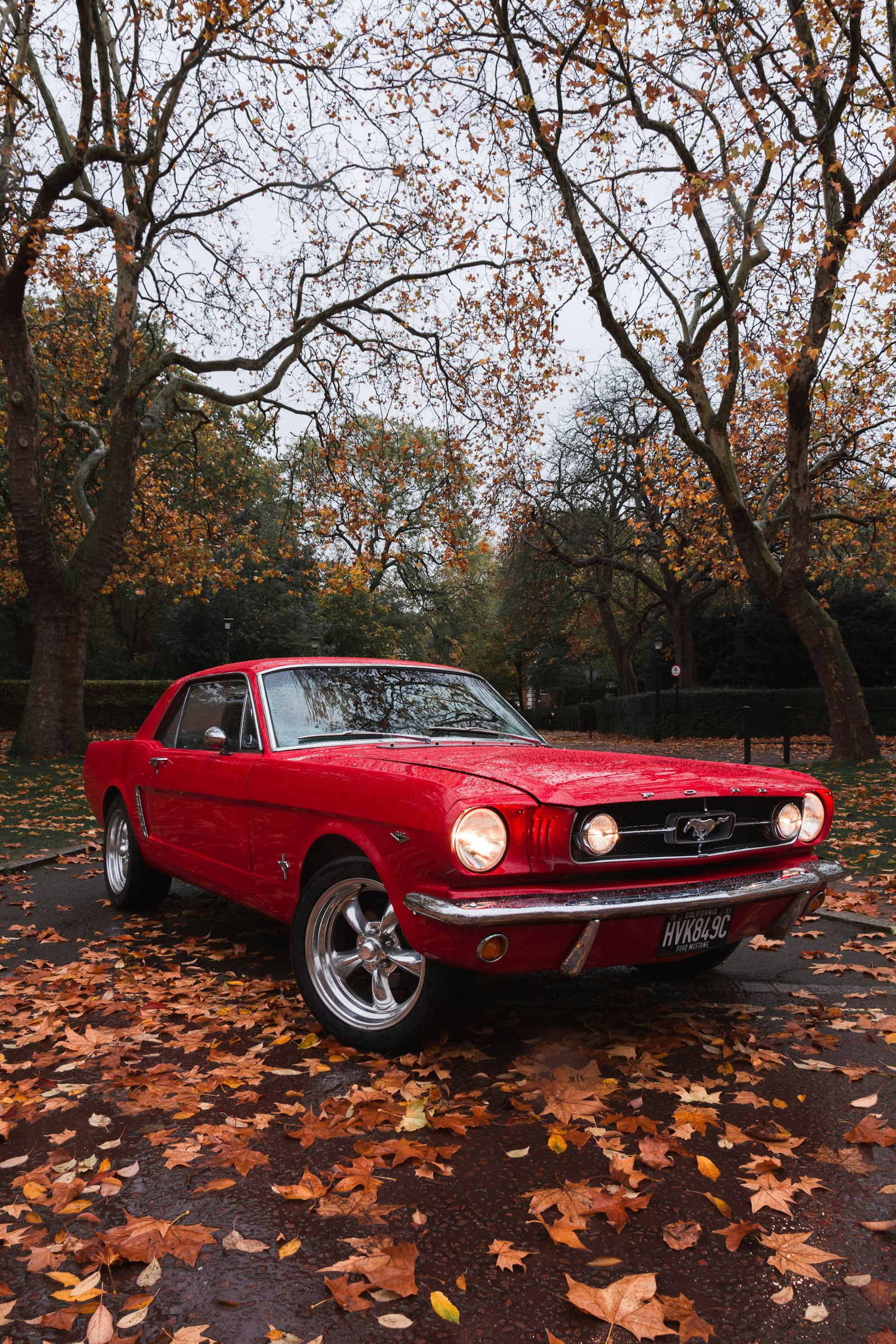
There is a particular kind of car that arrives in my advisory work more than any other: the one that has been asleep. Twenty years in a barn, a lock-up, the back of a workshop that closed. The owner has died or lost interest or simply ran out of road, and the car has sat, slowly, doing nothing. Now someone has bought it, or inherited it, and they want to drive it. The first question they ask is almost always the wrong one. They ask what it needs restoring. The right question is whether it needs restoring at all — and the answer, for a genuinely preserved car, is usually no.
What it needs is recommissioning: the disciplined process of making a dormant car safe and usable again while preserving as much of its original fabric as possible. Recommissioning and restoration are not points on the same scale. They are different projects with opposite goals. Restoration returns a car to a former condition by replacing and refinishing. Recommissioning keeps the car exactly as it is, intervening only where the passage of time has created a problem of safety or function. If you remember nothing else, remember this: restoration removes the years; recommissioning respects them.
Before you touch anything
My training as a conservator drilled one habit above all others: document before you intervene. Every museum object gets a condition report before any work begins, because the moment you start touching something you start changing it, and you can never again know precisely what you had. A sleeping car deserves the same discipline.
So before a single fluid is drained, I photograph everything. The overspray in the engine bay. The date stamps on the glass. The wear pattern on the driver's seat. The way the original hose clamps are oriented. The grime itself, because the grime is a record of where the car has been. I note the paint depth readings, the chassis and engine numbers, the original markings. This is not bureaucracy. It is the difference between recommissioning a car and quietly destroying its evidence one well-meaning afternoon at a time. You cannot preserve what you have not first understood.
The order of operations
Recommissioning has a correct sequence, and the sequence exists for safety. A car that has sat for two decades has rubber that has hardened, fluids that have degraded, fuel that has turned to varnish, and brakes you must not trust under any circumstances. The temptation — and I have watched people do this — is to put in a battery, splash some fresh fuel in the tank, and turn the key to "see if it runs." Do not. You can do real and irreversible mechanical damage in the first ten seconds, and a car that fires up but cannot stop is how people get killed.
Work in this order:
1. The fuel system, before any attempt to start
Old petrol does not simply go stale; it oxidises into gums and varnish that coat the inside of the tank, block jets, and seize pumps. Drain the tank completely and inspect it. Surface rust inside a steel tank can often be treated and the tank preserved; a tank rotted through must be repaired or, regrettably, replaced. Clean or rebuild the carburettor or injection components. Replace the rubber fuel lines as a matter of course — perished fuel line is a fire waiting for an ignition source, and nobody sane preserves a perished fuel hose. Fit a fresh filter. Only fresh fuel, only after the system is clean.
2. Lubrication, before the engine turns under power
Change the engine oil and filter before the engine runs, not after. Twenty-year-old oil has lost its additives and may be holding acids and moisture. Before cranking on the starter, I prefer to turn the engine over by hand if possible and to pre-lubricate — on many engines you can build oil pressure by spinning the pump or cranking with the ignition disabled until the gauge moves — so that bearings are not running dry on first fire. The drained oil itself is diagnostic: look at it, smell it, check for water or metal. The old oil tells you about the engine before you ever hear it run.
3. Cooling and the other fluids
Flush and refill the cooling system; old coolant turns acidic and eats water pumps and cores. Check the gearbox and axle oils. Brake fluid and clutch fluid are almost always due for complete replacement — fluid absorbs water over the years and a system full of moisture corrodes from the inside and boils under use.
4. Brakes — assume nothing
This is the one area where I am unsentimental about replacement. Rubber brake hoses degrade internally where you cannot see; they can swell shut or burst. Wheel cylinders and caliper seals harden and leak. After two decades, the entire hydraulic system should be inspected and, in most cases, rebuilt or renewed — seals, hoses, and fluid at minimum. I preserve the original brake hardware wherever I can: the master cylinder casting, the caliper bodies, the drums, the original lines if they are sound and not seized. But the perishable rubber and the fluid are consumables, and on a car you intend to drive, safety is not a place for preservation purism. A seized handbrake cable or a hose that lets go at speed will undo everything else you were trying to protect.
5. Tyres, then a gentle first drive
Tyres that look fine can be twenty years old and structurally rotten. Check the date codes; if they are decades old, replace them regardless of tread, because aged rubber lets go without warning. Then, and only then, a careful first drive — slow, brakes tested at walking pace first, ears and nose open for anything wrong.
What to preserve, what to replace: the deciding principle
The whole ethic comes down to a single distinction that conservators apply to everything: the difference between the perishable consumables and the original fabric. Consumables — fluids, filters, perished rubber, a dead battery, rotten tyres — were always meant to be used up and replaced. Renewing them does no violence to the car's originality; the factory expected it. Original fabric — the paint, the interior, the date-stamped glass, the engine and gearbox castings, the trim and the badges and the assembly-line marks — is the irreplaceable part, and the goal is to lose none of it.
So the rule I work to is this: replace what was always consumable and what safety demands; preserve everything else, and when in doubt, do less. A hardened fuel hose is consumable; replace it without a second thought. A worn but original driver's seat is fabric; you stabilise it, you clean it gently, you do not retrim it. A leaking wheel cylinder seal is consumable; rebuild it. A faded original headliner is fabric; you leave it. The test for any intervention is the conservator's test of reversibility — can this be undone later without harm? A new fuel line can be removed and the original refitted if one ever surfaces. A full retrim cannot be undone. Favour the reversible. Document the irreversible. Refuse the unnecessary.
The interior, specifically
People are quickest to ruin the interior, because a tired interior reads as "scruffy" and a new one reads as "done." Resist. Original leather that is dry and cracked can very often be cleaned and fed back to suppleness with patience; I would try months of gentle conditioning before I would consider replacement. Original carpets can be lifted, cleaned, and refitted. Wood veneer that has lost its lacquer can sometimes be stabilised rather than refinished. The original interior is one of the most powerful carriers of a car's history — the wear on the wheel rim where a thousand hands have rested, the patina on the gearknob, the sag in the seat that matches the shape of someone now gone. Erase it and you erase the part of the car that was most intimately human. Preserve it and you keep the story.
The reward
A sympathetically recommissioned car will never win the trophy that goes to the bare-metal restoration in the next class. It will have its marks and its honest age and its dent that someone declined to fix. But it will be safe, it will drive, and it will still be — irreplaceably — itself. I recommissioned my own 1973 2002 to exactly this standard: new fluids, new perishables, rebuilt brakes, and not one square inch of new paint or one panel of new trim. It runs beautifully and it is still entirely original, and those two facts are not in tension. They are the whole point. You do not have to choose between driving a car and preserving it. You only have to wake it carefully, and in the right order, and to know the difference between the parts that were meant to wear out and the parts that can never be made again.