
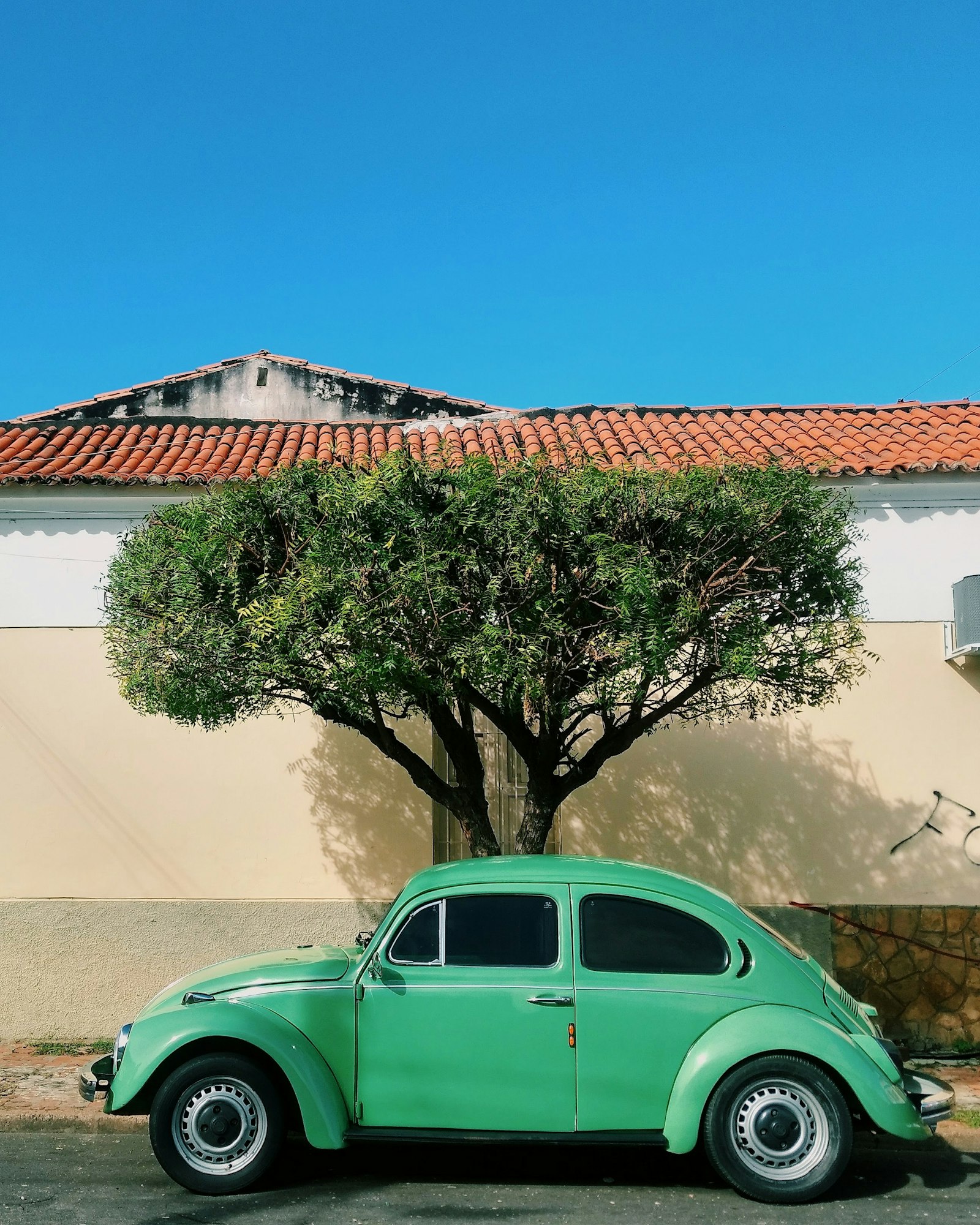
The phrase "barn find" has been so thoroughly abused that I have started to flinch when I hear it. It conjures a precise and seductive image: the dust-sheet pulled back, the cobwebs across the windscreen, the perfect time-capsule car untouched since some golden decade, discovered by luck and bought for nothing. That image sells cars and television programmes. It is also, the great majority of the time, a fiction — and learning to tell the genuine article from the staged one is the first and most expensive skill a buyer in this corner of the hobby can acquire.
What a staged barn find looks like
The staged barn find is now an established sub-genre of the trade, and the people who produce them are good at it. The tells, once you know them, are not subtle:
- The dust is wrong. Real settled dust accumulates over decades in even, undisturbed layers, thicker on horizontal surfaces, undisturbed in the crevices. Applied or sprinkled dust sits oddly, smears, and is absent exactly where hands would have touched while arranging the shot. Genuine grime has directionality and history; staged grime looks like set dressing, because it is.
- The cobwebs are theatrical. Real spiders do not festoon a car's grille like bunting. They build in corners and shadows. A dramatic web draped photogenically across the badge is a prop.
- The mechanicals are too fresh. A car that has genuinely sat for thirty years has seized brakes, perished rubber, a flat-spotted set of tyres, and varnish in the fuel system. If the "barn find" has recent tyres, fresh-looking hoses, or fluid that is not the colour of treacle, someone has been at it — which is fine, but it is not what is being advertised.
- The story is too clean. The genuinely dormant car usually comes with a messy, partial, human history. The staged one comes with a tidy narrative that happens to flatter the price.
None of this means a recently-worked car is a bad buy. It means the romance is being sold at a premium, and you should price the metal, not the cobwebs.
What a genuine one looks like
The real thing is, frankly, less photogenic and more interesting. A car that has actually slept for twenty or thirty years shows it everywhere, and the evidence is internally consistent in a way no stylist can fake. The dust is even and undisturbed. The tyres are flat-spotted and date-stamped from the era it stopped moving. The fuel, when you open the tank, smells of varnish and has gone the colour of weak tea. The brakes are seized. There may be rodent damage in the interior, a wasp nest in the air box, surface rust blooming where condensation has cycled through decades of seasons. The battery is long dead and may have leaked. The documents, if any survive, are genuinely old and genuinely incomplete.
And, crucially, the original fabric is all there and all undisturbed. This is the prize that makes a genuine barn find worth the trouble: it has not been restored, repainted, retrimmed, or improved by anyone. Whatever it is, it is honest. The paint is the factory paint, however faded. The interior is the original interior, however tired. From a conservation standpoint, a true barn find is one of the most valuable kinds of object there is — an unaltered survivor — precisely because nobody got to it before you.
The decision tree, once it is home
This is where most buyers go wrong, because they make the decision emotionally and immediately instead of methodically and last. Get the car home, document it thoroughly as I described in my piece on recommissioning, and only then sit down and work through three honest options. The choice you make will shape both the car's character and its value for the rest of its life, and the three paths are genuinely different.
Option one: preserve
If the car is genuinely complete and original — original paint, original interior, sound enough structure — the highest-value path is almost always to preserve it. You stabilise rather than improve: arrest any active corrosion, clean gently, conserve the surfaces, and do nothing that removes original fabric. You do not drive it, or you drive it sparingly, and you accept it as the survivor it is. This is the route to a preservation-class car, the kind that now wins at Pebble Beach and Amelia and commands the premium the market increasingly pays for originality. The supply of unrestored survivors only ever shrinks; choosing to preserve one keeps you on the right side of that scarcity. The catch is restraint — preservation is the hardest path emotionally because it means leaving the car looking old.
Option two: recommission
If you actually want to drive the car — and most people do — the path is to recommission rather than restore. Make it safe and usable by renewing the consumables and the safety-critical perishables (fuel system, fluids, brakes, tyres) while preserving everything else exactly as found. The car keeps its original paint and interior and its honest patina, but it stops and steers and runs reliably. This is, for the genuinely original car you mean to use, the best of both worlds, and it is where I steer most clients. It protects the irreplaceable fabric and the value that comes with it, while giving you a car you can take out on a Sunday without fear.
Option three: restore
Full restoration — strip, repaint, retrim, rebuild to a former condition — is the right answer in only two situations. The first is when the car is genuinely too far gone to preserve: the structure is rotten, the original fabric has already been destroyed by rust or damage, and there is simply not enough left to conserve. The second is when the car was never a special survivor to begin with — a common model in poor, much-altered condition where originality carries no premium and a good restoration genuinely adds value. Outside those cases, restoring a sound original car is, to my eye, a destruction of value as well as of history. You are spending a great deal of money to convert a rare unrestored survivor into a common restored example, and the market has stopped rewarding that conversion the way it once did.
What each path costs — honestly
The romance of the barn find is that it was cheap to buy. The reality is that the purchase price is frequently the smallest number in the whole exercise, and the three paths cost wildly different amounts.
Preservation is the cheapest in cash and the most expensive in discipline. Conservation-grade stabilisation, careful cleaning, climate-sensible storage — real but modest costs. The expense is restraint, and the patience to leave money "on the table" by not making the car shiny.
Recommissioning sits in the middle. A thorough fuel-system clean, full fluid replacement, a complete brake overhaul, new period-correct tyres, and the inevitable surprises a sleeping car hides — this adds up to a genuine sum, sometimes more than the car cost, but it is bounded and predictable, and it buys you a usable car with its value intact.
Restoration is the financial cliff, and it is the one buyers consistently underestimate. A full body-off restoration of even a modest classic runs into sums that routinely exceed the finished car's market value — and on a barn find, the budget is a guess, because you cannot know what the rust has done until the car is in pieces. The honest figure is "more than you think, and then more again."
How the choice moves the value
Hold the three outcomes side by side and the market's verdict is now fairly clear. A genuine original car, preserved, is worth the most to the buyer who values originality — and that buyer is multiplying. The same car, recommissioned but still original in paint and trim, holds essentially that same value while being usable, which is why it is the path I most often recommend. The same car fully restored is, counter-intuitively, frequently worth less than it would have been preserved, because the restoration consumed the one quality that was irreplaceable. You spent six figures to make it worth less. The only restorations that reliably add value are the ones performed on cars that had no surviving originality left to protect.
So the real cost of a barn find is not the dust or the cobwebs or even the bill to wake it up. The real cost is the decision, and the decision is irreversible. You can recommission a preserved car later; you can never un-restore a restored one. When a genuine survivor lands in your hands, the most valuable and most difficult thing you can do is the same thing it always is in this work: pause, document, and resist the urge to improve. The car has waited twenty years already. It can wait a little longer while you choose well.